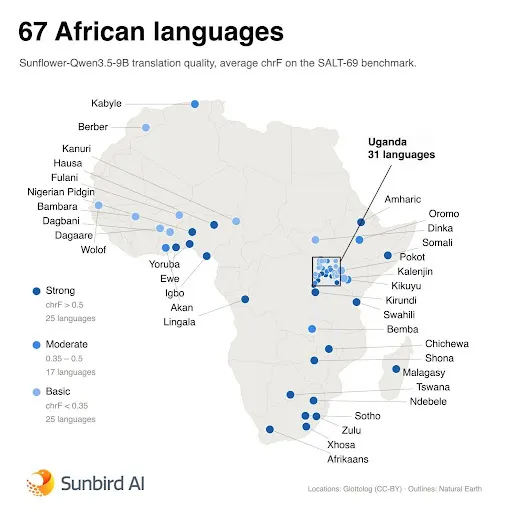
From 31 Ugandan languages to 67 across the continent, now with speech.
Most AI systems serve a small number of the world’s languages well. English dominates. A handful of other widely spoken languages get reasonable support. Nearly everything else, including most of the roughly 2,000 languages spoken across Africa, gets left out.
This is not a minor gap. It shapes who can use a chatbot to get health information, who can have a document translated accurately, who can use a voice interface without first learning a second or third language. For hundreds of millions of people whose languages mainstream AI barely recognizes, that gap is a real barrier to using these tools at all.
Sunbird AI, a not-for-profit organisation based in Kampala, Uganda, has been working on this problem directly. Its work sits alongside a broader movement in African language research working to close this gap from many directions. Sunflower v2, with a release date of September 24, 2026, is set to be Sunbird AI’s latest and largest contribution to that effort so far.
Proof It Can Be Done
Sunbird AI’s first Sunflower models set out to test whether it could close this gap, not just describe it. It covered 31 Ugandan languages and outperformed ChatGPT and Gemini 2.5 Pro on translation for 24 of them.
That result mattered because it showed the approach works across dozens of languages with far less available training data than English or French, not just one or two well-resourced ones. It became the foundation for Sunflower v2.
What’s in Sunflower v2?
Sunflower v2 is a suite of four open-weight models. Each handles a different part of the same problem: understanding and producing language, in text and in speech, across a much wider set of African languages.
1.Reasoning and translation. Sunflower v2 Qwen3.5–9B, our flagship model, handles translation, general reasoning, and text-based tasks across 67 African languages, extending its reach from Uganda to the rest of the continent.
2.Understanding speech. Sunflower v2 Whisper-51, our speech model can turn spoken language into text across 51 African languages. In evaluation, it outperformed Gemini 3.5 Flash, GPT-4o Transcribe, and Meta’s Omnilingual ASR on most of the languages tested.
3.Speaking back. Sunflower v2 Orpheus-3B-TTS-multilingual, our TTS model can also convert text into natural-sounding speech, with more than 20 voices across the languages it supports. Paired with speech recognition, it can listen and respond in the same language, not only read and write it.
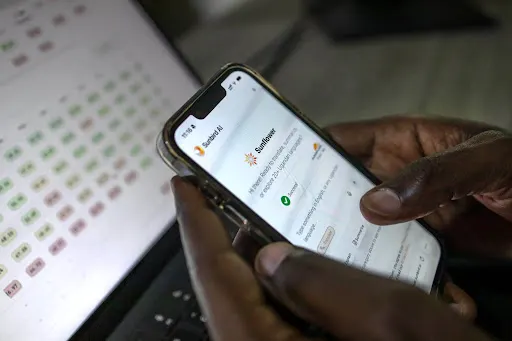
4.Working offline. A compact version of Sunflower v2 based on the Gemma4-E2B model runs directly on a mobile device, offline, with no server connection required. For regions where connectivity is unreliable or expensive, that capability determines whether a tool gets used at all.
Why This Matters.
For governments and program officers, Sunflower v2 offers a way to build public services, from health information lines to agricultural extension tools, that work in the languages people speak day to day, without depending on a closed, proprietary vendor.
For funders, it offers a track record rather than a pitch. Sunflower v1 proved the underlying approach on a smaller scale. Sunflower v2 tests whether it holds at a much larger scale, across more than double the number of languages and more capabilities, including speech, that the first version did not attempt.
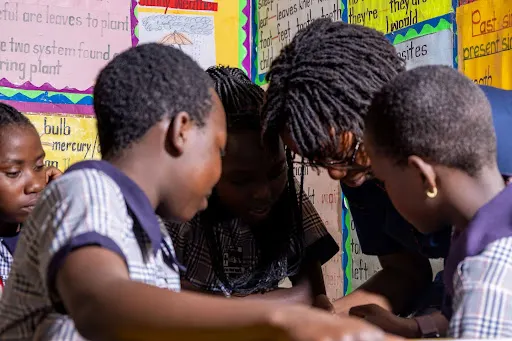
For educators and learning programs, it makes mother-tongue digital literacy possible for students through models tailored to indigenous curriculum needs.
For language labs and researchers, Sunflower v2 is released as open-weight models that are open to inspect, adapt, and build on directly.
Everything Is Open
All four models are available for preview on Hugging Face.
In the coming weeks, Sunbird AI will publish more detailed posts on the technical work and the community process behind this release, including how the training data was built, how the models were evaluated, and more.
Join the Launch!
Sunbird AI is hosting a live session on the day of the release to walk through Sunflower v2, demonstrate it in use, and take questions.
Thursday, September 24, 2026. 3:00 PM EAT. Open to researchers, developers, policymakers, funders, and civil society organizations. No technical background required.